
⚠ Important Notice: Clean Couture serves Miami-Dade & Broward counties only. We do not sell leads. Fraudulent activity using our name has been reported.
A dishwasher works hard every day, but many people forget that it also needs regular cleaning. Over time, grease, soap scum, food scraps, and hard water minerals collect inside the machine. This buildup often leads to a bad smell, cloudy glasses, white residue, slow drainage, and dishes that no longer come out fully clean. If you have noticed any of these problems, learning how to clean a dishwasher can help restore its performance and keep it working longer.
Regular dishwasher cleaning does more than improve the smell. It also protects important parts like the filter, spray arms, rubber gasket, and drain. A clean dishwasher runs more efficiently, uses water better, and leaves fewer spots on dishes. This guide explains how to clean a smelly dishwasher step by step, using simple products like white vinegar, baking soda, and dishwasher cleaner tablets.
Most dishwashers give clear warning signs before buildup becomes a major problem. You may notice that dishes no longer look clean. You may smell mildew or sour water each time you open the door. The inside of the dishwasher may also feel greasy.

Grease buildup is one of the biggest causes of dishwasher problems. It sticks to the inside walls, spray arms, and drain area. Over time, this greasy layer traps food particles and bacteria, which creates a strong smell inside the machine. Soap scum can also build up and leave a dull film on plates and glasses.
If you live in an area with hard water, mineral deposits and limescale may form inside the dishwasher. These deposits often block the spray arm holes and leave white spots on dishes. A clogged dishwasher drain can also slow down drainage and leave dirty water sitting at the bottom of the machine.
A dishwasher needs a little attention every week and a deeper cleaning at least once each month. Small tasks after each cycle can stop the buildup before it becomes a problem. Removing food scraps, wiping the door edges, and leaving the door slightly open helps reduce moisture and prevent mold from forming.
Once a week, take a few minutes to clean the dishwasher filter and inspect the spray arms. This helps keep water flowing correctly through the machine. Every month, run a full dishwasher cleaning cycle with white vinegar, baking soda, or a cleaning tablet. If you have hard water, you may need to clean it more often because mineral buildup happens faster.
After every wash, remove any food scraps left at the bottom of the dishwasher and wipe the inside edges of the door. This quick step keeps food from rotting inside the machine and helps prevent bad smells.
Once a week, clean the filter with warm water and check the spray arms for clogged holes. This helps keep water flowing properly and prevents grease and food from building up.
Once a month, deep clean the dishwasher with vinegar, baking soda, or a cleaner tablet. This removes grease, limescale, soap scum, and odor before they become harder to remove.
After every wash, remove any food scraps left at the bottom of the dishwasher and wipe the inside edges of the door. This quick step keeps food from rotting inside the machine and helps prevent bad smells.
Once a week, clean the filter with warm water and check the spray arms for clogged holes. Once a month, deep clean the dishwasher with vinegar, baking soda, or a cleaner tablet. This removes grease, limescale, soap scum, and odor before they become harder to remove.

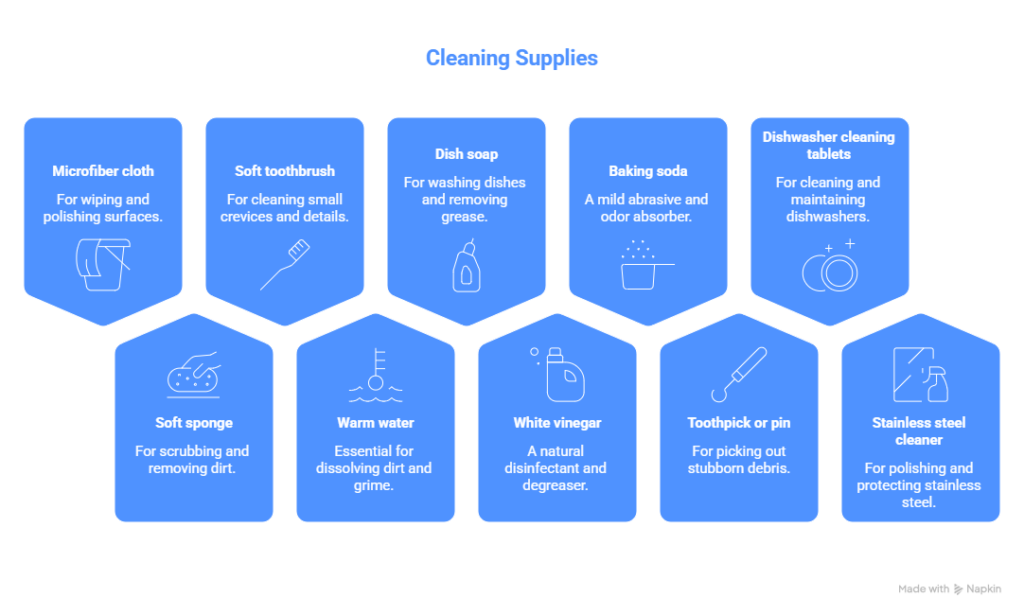
Before you start, gather all the supplies you need. Most items are already found in the kitchen. You will need:
A toothpick or pin can help clear blocked spray arm holes. If you want a stronger cleaner, you can also use dishwasher cleaning tablets or a liquid dishwasher cleaner. Stainless steel cleaner is helpful if your dishwasher has a stainless steel exterior and you want to remove fingerprints and streaks.
Start by taking out all dishes, utensils, and racks. Look carefully at the bottom of the dishwasher near the drain. Food scraps, broken glass, paper labels, or pieces of plastic often collect in this area. Remove anything you find because even small debris can block the drain and create bad smells.
If you see standing water, wipe it up with a towel before you continue. Food residue trapped at the bottom of the dishwasher is one of the biggest reasons a dishwasher smells bad. When leftover food sits inside for several days, it begins to rot and creates a strong sour or rotten smell.
Food particles often become trapped under the filter or around the drain. Grease can also collect in these hidden areas and trap bacteria. Over time, the bacteria multiply and create a strong smell that stays inside the dishwasher even after you run another cycle.
A dirty dishwasher may smell sour, musty, or even like rotten eggs. If the odor keeps coming back, there is usually still food trapped inside the filter, drain, or spray arms. Cleaning these areas thoroughly is the best way to remove the smell completely.
The dishwasher filter is one of the most important parts to clean. It catches food before it reaches the drain. Most dishwashers have a round filter at the bottom center of the machine. In many models, the filter twists out easily by turning it counterclockwise.
Once you remove the filter, rinse it under warm water. Use dish soap and a soft toothbrush to scrub away grease and food particles. Pay extra attention to the mesh screen because food often becomes trapped there. When the filter looks clean, rinse it again and place it back into the dishwasher.
If you run your dishwasher every day, the filter should be cleaned once a week. Families who cook often may need to clean it even more frequently. If you only use the dishwasher a few times each week, cleaning the filter once a month is usually enough.
A dirty filter can cause several problems at once. Dishes may come out dirty, water may drain slowly, and bad smells may return after every wash. Many people think their dishwasher is broken when the real problem is only a clogged filter.
A dirty filter can lead to several problems:
The spray arms move water through the dishwasher during the wash cycle. If the small holes in the spray arms become blocked, water cannot reach every dish. This often causes dirty plates, cloudy glasses, and food left on the top rack.
Remove the lower spray arm first, then remove the upper spray arm if your dishwasher allows it. Rinse both under warm water and inspect the small holes closely. Use a toothpick, pin, or soft brush to remove food particles and mineral buildup. Once the holes are clear, rinse the spray arms again and put them back into place.
Spray arm holes can become blocked by:
Even a small blockage can reduce water pressure and stop the spray arm from spinning correctly. That is why dishes sometimes come out dirty even after a full cycle.
Cleaning the spray arms regularly keeps water moving evenly throughout the dishwasher. It also helps stop grease and food from building up in other parts of the machine.
The inside of the dishwasher door and the rubber seal around it often collect moisture, grease, and mold. Use a damp microfiber cloth with warm, soapy water to wipe the door, corners, edges, and around the latch. Do not forget the soap dispenser area because detergent often builds up there.
Next, clean the rubber gasket carefully. A soft toothbrush works well because it can reach inside the folds and corners. If you notice mold or mildew, make a paste with baking soda and water and gently scrub the area. Once it is clean, dry the gasket fully so mold does not return.
If you notice mold around the rubber seal, make a paste with baking soda and water. Gently scrub the area with a soft toothbrush, then wipe it clean with a damp cloth. Dry the gasket fully after cleaning so mold does not return.
Many people only clean the large visible parts of the dishwasher and forget the small hidden areas. Dirt often builds up in these spots:
These places may look clean at first, but they often hold the most grease and food residue. Cleaning these hidden areas can make a big difference. In many cases, the bad smell disappears once these spots are cleaned properly.
White vinegar is one of the easiest and most effective ways to clean a dishwasher naturally. Fill a dishwasher-safe cup or bowl with one cup of white vinegar and place it on the top rack. Run the dishwasher on a hot water cycle while it is empty.
The vinegar helps break down grease, soap scum, mineral deposits, and hard water stains. It also removes the bad smell left behind by trapped food and bacteria. After the cycle is finished, the inside of the dishwasher should look cleaner and smell fresher.
Vinegar is acidic, so using too much too often can damage rubber parts over time. For most dishwashers, using vinegar once a month is safe. However, it is always a good idea to check the owner’s manual first because some brands have different recommendations.
Newer dishwashers from Bosch, KitchenAid, and Samsung may suggest specific cleaning methods or products.
Vinegar works best when your dishwasher has:
After the vinegar cycle, sprinkle one cup of baking soda across the bottom of the dishwasher. Then run a short hot cycle. Baking soda helps remove any odor or stains left behind after the vinegar cleaning.
Baking soda works especially well if your dishwasher still smells musty or sour. It neutralizes odor and leaves the inside smelling fresh. It can also help remove light stains around the drain and the bottom of the dishwasher.
Baking soda absorbs strong smells and helps remove light stains. It works well for musty odors, sour smells, and grease left behind after a wash cycle.
Using both together once each month can keep your dishwasher clean, fresh, and free from buildup.
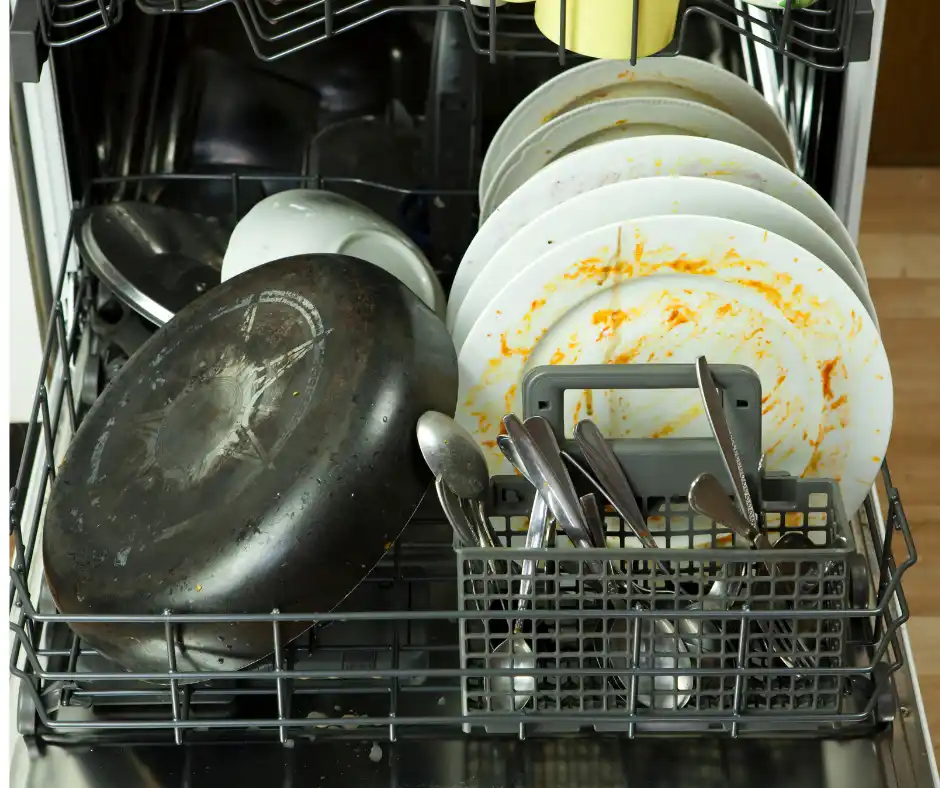
Dishwasher cleaning tablets are useful if you want a quick and easy cleaning method. They are especially helpful for heavy mineral buildup, hard water stains, and strong odors. Simply place the tablet where the package instructions recommend and run a normal hot cycle.
Hard water leaves minerals behind every time the dishwasher runs. Over time, these minerals form a white, chalky layer inside the machine. You may notice white residue on glasses, cloudy dishes, or limescale near the spray arms and drain.
If hard water is a common problem in your home, use rinse aid regularly and clean the dishwasher more often. Products like Finish Dishwasher Cleaner and Affresh Dishwasher Cleaner can help remove mineral buildup. A water softener may also help if the water in your area is very hard.
You may have hard water if you notice:
Finish Dishwasher Cleaner and Affresh Dishwasher Cleaner are two of the best options for removing hard water stains and mineral buildup from a dishwasher.
Learning how to clean a dishwasher does not take much time, but it can make a big difference. By cleaning the filter, spray arms, drain, and rubber seal regularly, you can prevent bad smells, cloudy dishes, and drainage problems before they start.
A monthly cleaning routine with vinegar, baking soda, or dishwasher cleaner tablets helps keep the dishwasher fresh and working properly. With regular care, your dishwasher will last longer, perform better, and leave your dishes cleaner every time.
A dishwasher can smell worse after cleaning if food is still trapped under the filter, inside the drain, or around the rubber seal. Cleaning can loosen old grease and debris, which may create a stronger smell for a short time. Remove the filter, check the spray arms, wipe the gasket, and clean the drain area. After that, run another hot cycle with vinegar to remove the remaining odor.
The fastest way to clean a dishwasher is to empty it, wipe the door and rubber seal, remove food from the filter, then run a hot cycle with a dishwasher cleaning tablet or white vinegar. This takes about 30 to 60 minutes and quickly removes bad smells, grease, and cloudy residue. Wipe the outside with a microfiber cloth before guests arrive for a cleaner look.
If clean dishes smell bad, the problem is usually inside the dishwasher. A dirty filter, clogged spray arms, standing water, or mold around the gasket can spread odor onto plates and glasses. Hard water and too much detergent can also leave a stale smell. Clean the filter, drain, and spray arms, then run a vinegar cycle to remove the odor completely.
Yes. Homes with pets, large families, or frequent cooking usually need more dishwasher cleaning because more grease, pet hair, food scraps, and residue build up inside. Clean the filter once a week and deep clean the dishwasher every two weeks instead of once a month. This helps prevent odor, slow drainage, and dirty dishes.

As a leading cleaning company in Miami FL, we prioritize delivering high-quality cleaning solutions for homes, apartments, and offices. From thorough deep cleaning to regular housekeeping and building cleaning services, we focus on providing a clean, organized, and sanitized environment. Trust our professional house cleaners in Miami to make your space shine while maintaining eco-friendly practices.
© 2025 Clean Couture LLC  All Rights Reserved.